When discomfort appears in the knees, the source is not always the knee itself.
The knee sits between the hip and the ankle and is influenced by everything above and below it. Tight calves, restricted quadriceps, stiff ankles, and limited movement in the pelvis can all contribute to sensations of compression or discomfort around the joint.
In this class, Kathy explores a simple but often overlooked approach: creating space around the knee by addressing the surrounding tissues.
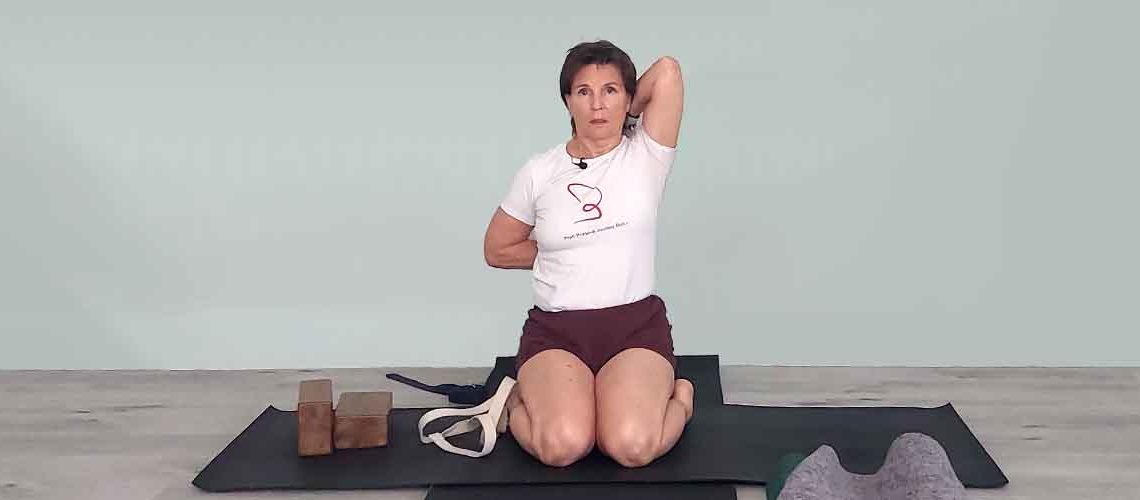
The practice begins with a rolled mat placed behind the knees. While initially intense for many students, this technique helps release the calf muscles and creates additional room in the back of the knee. Once the calves soften, Virasana often becomes noticeably more accessible.
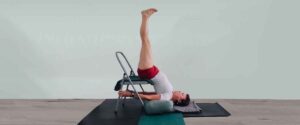
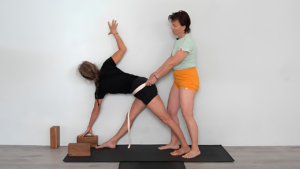
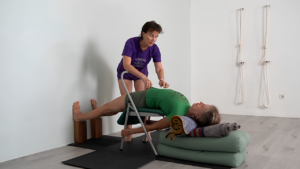
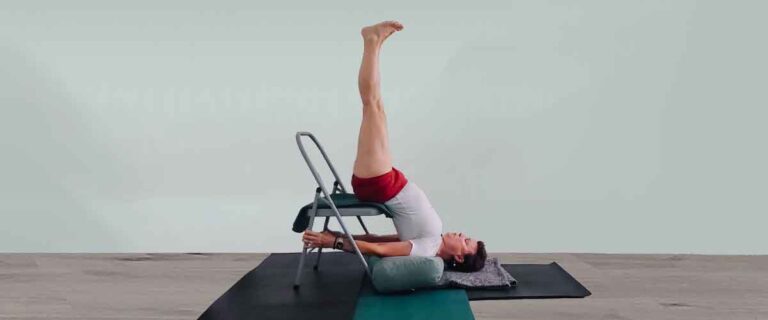
An important lesson throughout the class is the role of props. Rather than viewing props as modifications, they are used as tools for learning. A rolled mat, blanket, block, bolster, or strap each provides different information to the body. By experimenting with different heights and supports, students can discover the amount of assistance needed to maintain lift in the spine while allowing the legs to release.
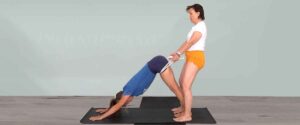
The class also explores the relationship between the quadriceps and hamstrings. While many students focus on stretching the hamstrings, tightness in the front of the thighs can restrict movement throughout the entire leg. Lengthening the quadriceps helps create greater balance around the knee and pelvis.
The supported Supta Virasana at the end of the practice brings these ideas together. With appropriate support beneath the back and thighs, the pose becomes an opportunity to lengthen the front body, open the chest, and release accumulated tension while protecting the knees.
Perhaps the most valuable teaching is learning to distinguish between useful sensation and harmful pain. Sensation from stretching, opening, or releasing may be part of the process. Sharp or excessive knee pain is not.
The goal is never to force a pose. The goal is to create the conditions in which the body can gradually release and adapt over time.