The Hidden Cost of Sitting All Day on Your Hips and Spine
When people think about poor posture, they often focus on the shoulders or upper back. Yet many postural problems begin lower down, at the pelvis.
The pelvis acts as a bridge between the legs and the spine. When it is well positioned, the spine can lengthen naturally. When it becomes habitually tilted forward or backward, unnecessary strain develops throughout the body.
During long periods of sitting, the pelvis often falls into one of two patterns. The first is the familiar slumped posture where the pelvis rolls backward, the lower back rounds, and the chest collapses. The second occurs when people lean forward toward a screen or keyboard, creating excessive tension in the lower back as the pelvis tips forward.
Neither position is designed to be maintained for hours at a time.
One consequence of prolonged sitting is that the hamstrings remain in a shortened position. Because the hamstrings attach to the sitting bones, their condition directly influences how the pelvis moves. When they become chronically tight, simple movements such as standing upright or bending forward can become more difficult.
The groins are also affected. Sitting for long periods keeps the hips in flexion, which can create compression at the front of the hip joints and reduce freedom of movement.
Fortunately, small movements throughout the day can make a significant difference.
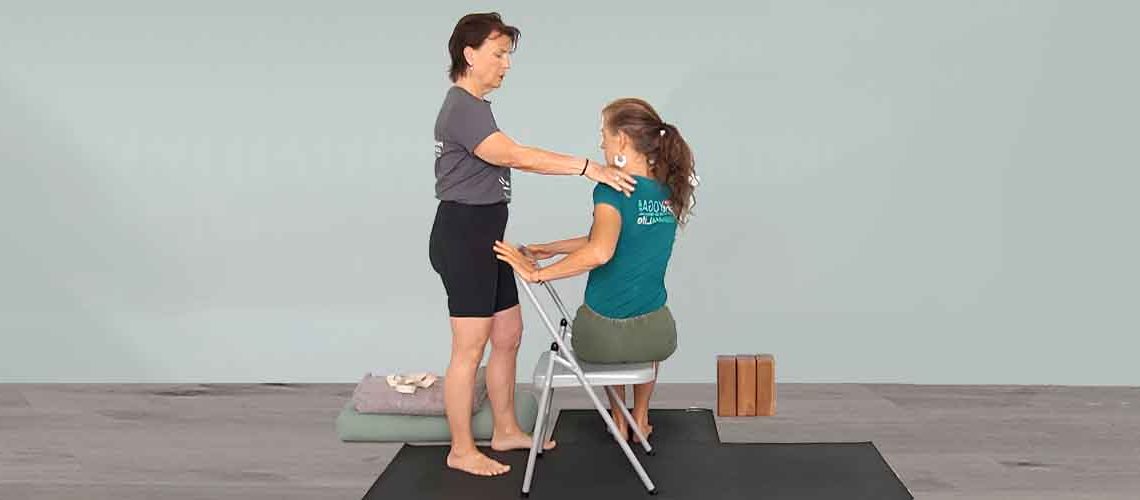
A simple seated twist helps restore mobility through the spine while encouraging the pelvis to remain grounded and balanced on the sitting bones. Extending the legs periodically can create length through the backs of the legs and relieve some of the shortening that accumulates during sitting. Using a wall to lift the chest and lengthen the side trunk can help counteract the rounded posture that develops while working at a desk.
The goal is not perfect posture. The goal is maintaining space, movement, and awareness throughout the day.
When the pelvis is balanced and the spine is supported, sitting becomes less of a strain and the whole body functions more efficiently.