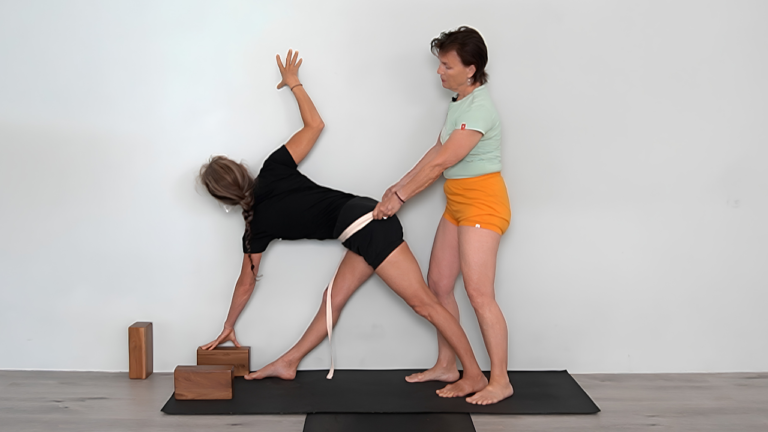

In Utthita Parsvakonasana, it is easy to focus on getting the hand to the floor or extending the top arm overhead. But the quality of the pose depends greatly on what is happening underneath—in the feet, legs, and pelvis.
As the front knee bends, it should remain aligned with the foot rather than moving inward or too far forward. At the same time, the front femur needs to draw back into the hip socket. The back foot remains grounded, the back thigh lifts, and the back leg continues to connect firmly into the pelvis.
These actions help prevent the pelvis from simply sinking downward.
There is also an important relationship between the tailbone and pubic bone. Rather than allowing the tailbone to lift and the lower back to shorten, the tailbone descends while the pubic bone and lower abdomen lift. From this organization of the pelvis, the spine and side trunk can extend more freely.
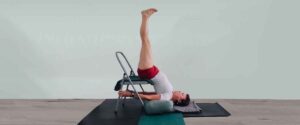
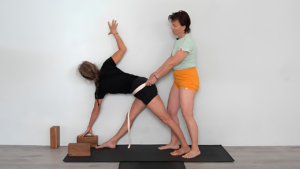
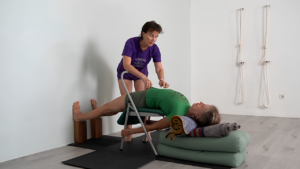
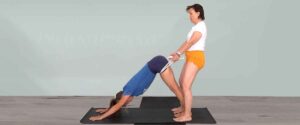
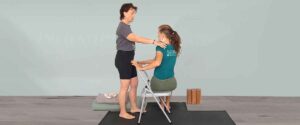
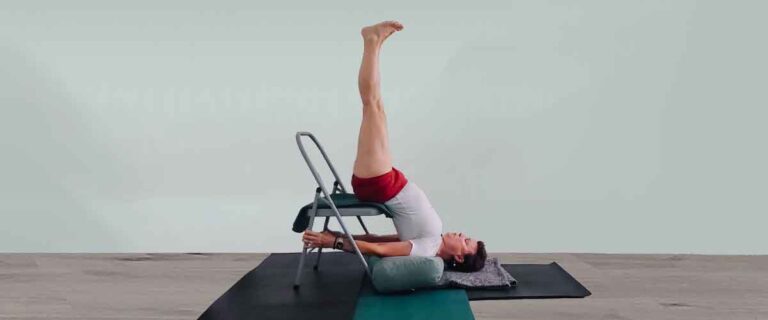
The use of props can make these relationships much clearer. A block under the lower hand prevents unnecessary collapse. Practicing against a wall provides feedback about the position of the trunk, pelvis, and legs. A chair gives even more stability, allowing you to remain in the pose longer and observe whether the pelvis is level and the spine is truly lengthening.
The purpose of support is not simply to make Utthita Parsvakonasana easier. It gives us more information. With that information, we begin to understand how the actions of the legs organize the pelvis—and how a well-organized pelvis creates the conditions for extension and rotation throughout the pose.