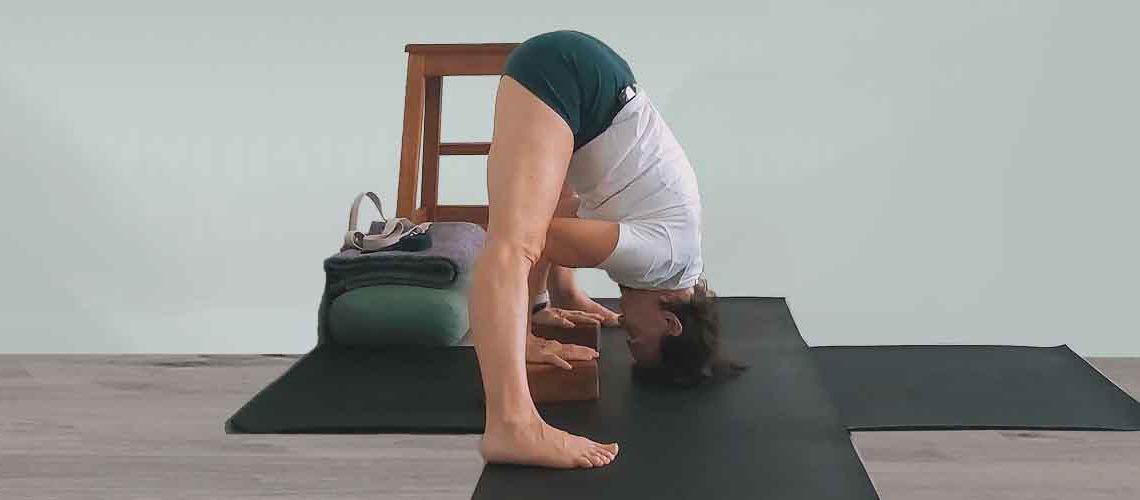
A 45-minute class with the wall, a strap and the ropes
If you’re experiencing tension in the neck and shoulders, this class is for you. You don’t have to have had an injury to be tight here. It can come from an injury, from non-use, or just from everyday activities.
Starting at the wall
We begin standing at the wall with the hand in line with the shoulder and the fingers facing back. Press into all the fingers and lift the inner elbow. Then turn the fingers up and keep that rotation of the inner arm, the top of the shoulder moving down and the inner armpit lifting. Whatever happens in the shoulders can affect the hands and the arms, and the other way around, from the hands to the wrists to the elbows.
Next, take the shoulder right to the wall and slide the arm back. Step by step, bring it higher, as high as you can without lifting the shoulder. Press the hand and turn the chest away from the wall, the shoulder blade moving in and the collarbones widening.
Using a strap
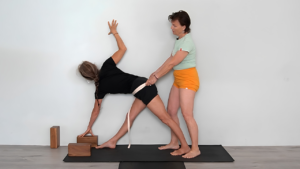
With a strap around the wrists, press out into it as you lift the arms in Tadasana to broaden the upper back, then walk the hands up the wall. Taking the strap behind the back, we bend forward with the back of the head at the wall. Keep the shoulder blades moving down so you’re not hunching over.
Lengthening the back of the neck
Here I use a high stool, but a countertop, a desk or even the top of a couch will do. Resting the chin on a block, the shoulder blades move down and the back of the head lengthens so there is no compression. Depending on what’s happening with your neck, you may want to stay on the higher height.
The ropes, the hands and Prasarita Padottanasana
At the rope wall we take the same rotation of the arm, then hang with both arms back. If you don’t have wall ropes, a rope around a door knob or something else that will hold can work. With the hands on blocks in Uttanasana and Prasarita Padottanasana, we work the wrists and the arms. These are also good preparations for Adho Mukha Vrksasana, although we don’t take it today.
Releasing in Setu Bandha Sarvangasana
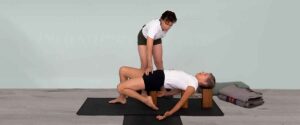
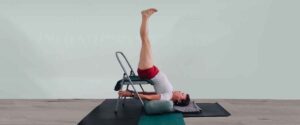
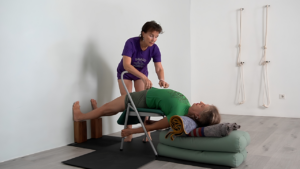
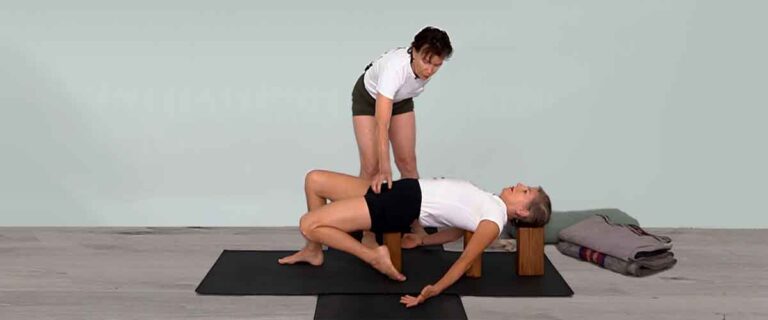
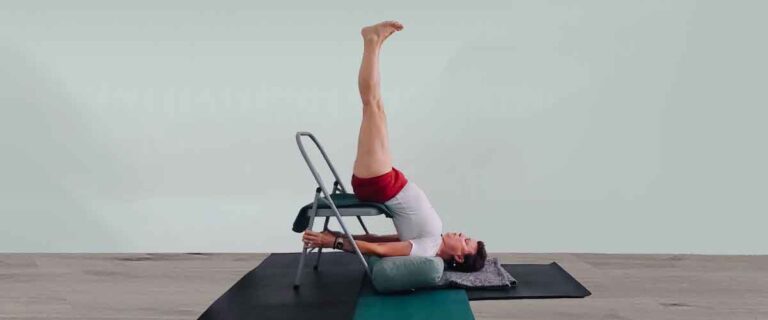
We finish lying over a bolster in Setu Bandha Sarvangasana with the feet on blocks at the wall. Because the shoulders are pinned down, the neck can lengthen, and a small roll of blanket under the back of the neck gives a little extra release. This position is part of the Sarvangasana series: the chest lifts and the throat narrows, the same as in Jalandhara Bandha.
If you have tension, you may also get headaches, or you may not be sleeping. Sometimes we have some lower back pain as well. One area affects the other, because they’re all connected. So every now and then, after sitting at the computer, driving or playing a one-armed sport like tennis or golf, take the time to release.
Enjoy, Namaste 🙏🏻
This sequence includes:
- Tadasana
- Urdhva Baddhanguliyasana
- Uttanasana
- Prasarita Padottanasana
- Adho Mukha Svanasana (wide stance)
- Setu Bandha Sarvangasana
- Savasana