Three Restorative Techniques
Many people experience neck tension after long hours sitting at a desk or looking down at a phone. It often feels like the neck itself is the problem, but in reality, compression develops through the entire body.
When the shoulders creep upward, the chest collapses, or the pelvis loses its support, the cervical spine has little choice but to compensate.
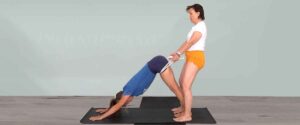
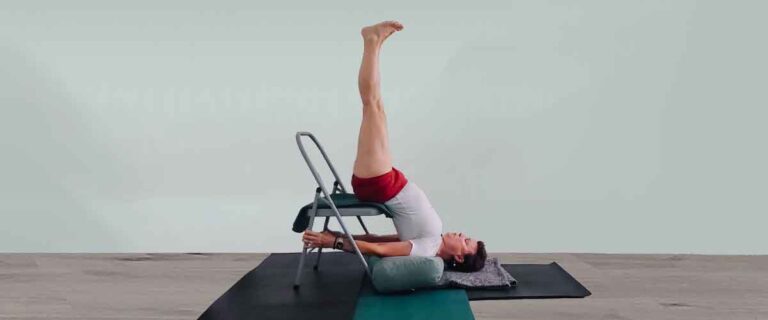
In this lesson, Kathy Cook demonstrates three supported Iyengar Yoga approaches that gently decompress the neck without aggressive stretching.
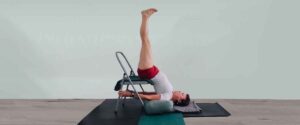
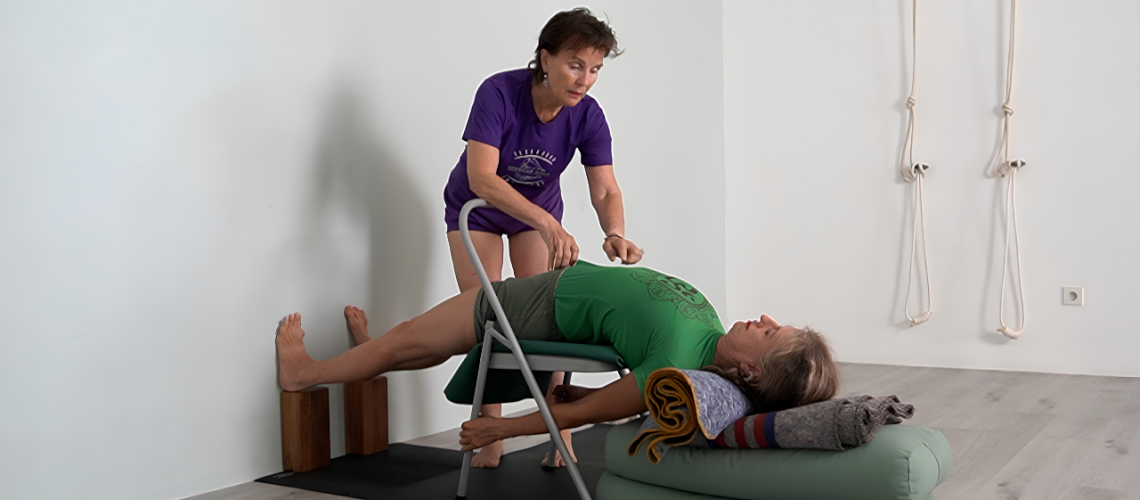
The first variation uses a chair, wall, blankets, and blocks to create support from the ground up. As the feet press into the wall, the legs organize the pelvis, the trunk lengthens, and the neck naturally begins to soften. Rather than isolating the neck, the whole spine participates.
A rolled blanket placed beneath the occipital bones provides gentle traction while supporting the natural curve of the cervical spine. Combined with the broadening of the chest and the downward movement of the shoulders, this creates space where compression often accumulates.
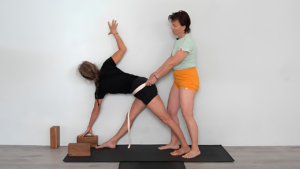
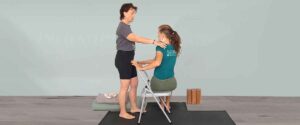
The second variation uses a yoga strap while seated. Instead of pulling the head forward, the strap offers gentle resistance that encourages the back of the neck to lengthen while the shoulders remain quiet and relaxed.
Finally, a supported Savasana variation uses a strap behind the occipital bones to create subtle traction. With the head lightly supported, the throat softens, the shoulders release, and the neck can truly rest.
These techniques reflect an important Iyengar Yoga principle: lasting relief comes from intelligent organization, not force. When the feet, pelvis, trunk, shoulders, and head work together, unnecessary tension gradually disappears.
Sometimes the most effective way to help the neck is to improve the support beneath it.