And what to do about it –Iyengar Yoga
Many students experience discomfort or compression in the lower back when practicing forward bends. It is often assumed that the lower back itself is the problem, but in many cases the cause lies elsewhere.
The relationship between the hamstrings, pelvis, and spine plays an important role in how we move into forward extensions. When the hamstrings are tight or the pelvis cannot tilt forward freely, the lumbar spine is often asked to compensate. Instead of lengthening, it rounds and compresses.
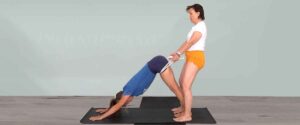
This is why active work in the legs is so important. The legs are not passive in forward bends. When the feet, thighs, and pelvis are working intelligently, they help create the conditions for the spine to extend evenly.
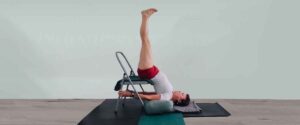
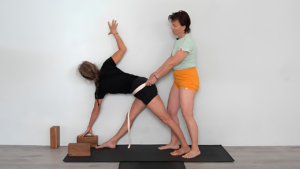
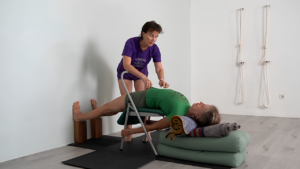
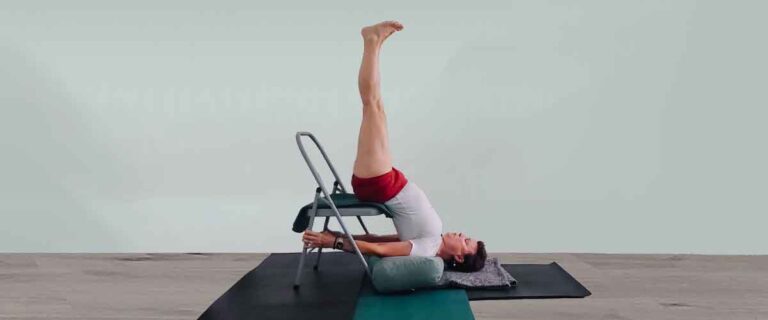
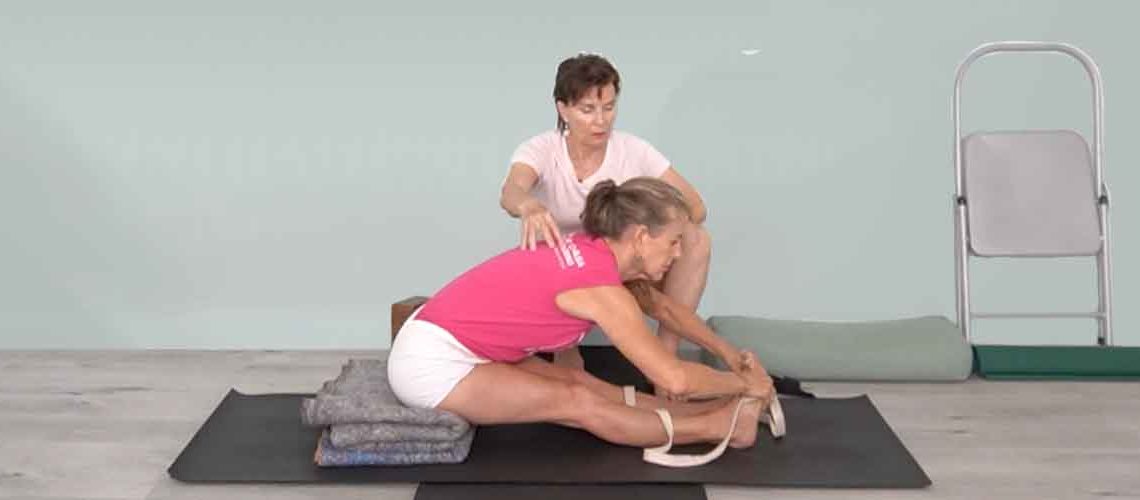
Props can also be valuable tools. Blankets, blocks, straps, and chairs can help reduce unnecessary strain and allow the body to experience the correct actions more clearly. Rather than forcing a deeper position, they help create space and understanding.
Forward bends are not about reaching further. They are an opportunity to develop awareness of how the legs, pelvis, and spine work together. When this relationship becomes more integrated, the lower back can soften, the breath becomes easier, and the pose feels more spacious and sustainable.
With patience and attention, forward bends become less about flexibility and more about intelligent extension.